Quick Answer:There is no single“best”residential window.The strongest choice for most homeowners is a double-pane vinyl or fiberglass residential window with Low-E glass and argon fill,because it balances cost,energy performance,and low maintenance.But the truly best residential window depends on three variables:your climate zone,how long you plan to stay,and whether you prioritize upfront price or long-term durability.
Why the“Best”Residential Window Is Conditional
Shopping for a residential window is not like buying an appliance with a single spec sheet winner.A window that performs beautifully in a Minnesota winter may be overkill—and overpriced—for a mild Southern climate.A residential window that looks stunning in a historic home may underperform in a modern net-zero build.
The U.S.residential window market reflects this complexity.ENERGY STAR–certified products have held roughly 80–86%market share among residential windows in recent years,yet within that certified pool,performance varies widely by climate zone and configuration.The“best”residential window is therefore the one that matches your specific conditions,not the one with the highest price tag or the most marketing claims.
The Four Residential Window Frame Materials,Ranked by Use Case
Frame material is the first fork in the road for any residential window decision.Each material carries distinct trade-offs in insulation,maintenance,cost,and appearance.
Vinyl:The Best Residential Window for Most Budgets
Vinyl(uPVC)is the most widely installed residential window material in North America for good reason.It is the most affordable option,requires essentially no maintenance—no painting,no sealing—and resists rot,moisture,and insects.Modern vinyl frames use multi-chambered hollow profiles that trap air for insulation,and better models add foam filling to boost thermal performance further.
The limitations are real but manageable.Vinyl expands and contracts more than other materials with temperature swings,and dark colors can absorb enough heat to warp lower-grade products.High-end vinyl with UV-stable formulations largely resolves this.Vinyl frames also tend to be bulkier than fiberglass or aluminum,which slightly reduces visible glass area.
Verdict:Vinyl is the best residential window frame for cost-sensitive projects in moderate climates where low maintenance matters more than slim sightlines.
Fiberglass:The Best Residential Window for Durability and Extreme Climates
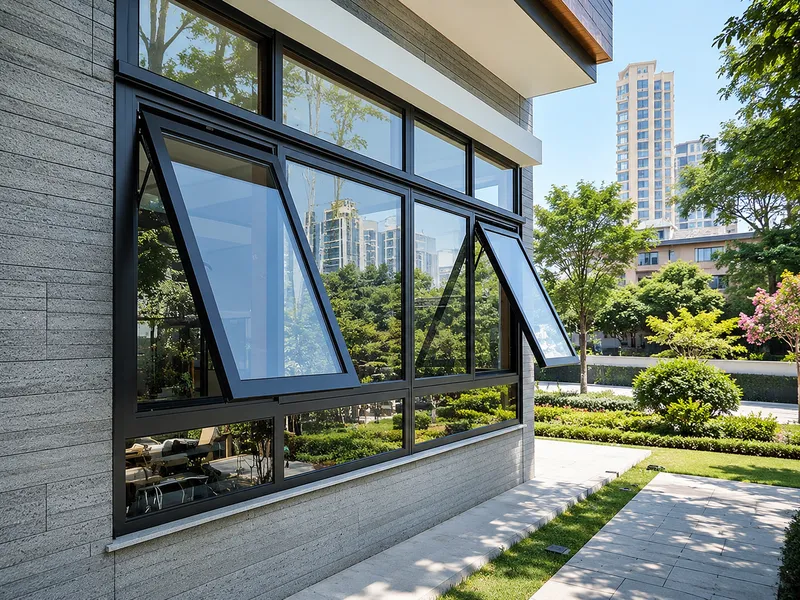
Fiberglass is the strongest frame material for homeowners who plan to stay put.It expands at nearly the same rate as glass,making it exceptionally dimensionally stable in large temperature swings—a critical advantage in cold climates and for large or dark-colored units.When the frame cavities are foam-filled,fiberglass delivers thermal performance superior to wood or vinyl.
The trade-off is cost.Fiberglass sits in the medium-to-high price tier,typically above vinyl but below premium clad-wood systems.It also offers a narrower frame profile than vinyl,which means more glass and more light for the same opening size.
Verdict:Fiberglass is the best residential window frame for cold climates,long-term ownership,and homeowners who want durability without the maintenance of wood.
Wood and Clad-Wood:The Best Residential Window for Aesthetics and Historic Homes
Wood remains the benchmark for interior warmth and architectural authenticity.It insulates well,can be painted or stained to match any interior,and in historic districts may be the only permitted option on visible facades.
The drawback is maintenance.Exposed wood demands regular painting or finishing to protect against moisture,sunlight,and insects,and it is vulnerable to rot where water collects.Clad-wood windows solve most of this by covering the exterior with aluminum,vinyl,or fiberglass while keeping a natural wood interior—but at a higher price than vinyl,and with the caveat that poorly detailed cladding can trap water behind it.
Verdict:Wood and clad-wood are the best residential window choices when aesthetic character or historic compliance is non-negotiable.
Aluminum:The Best Residential Window for Slim Frames and Modern Design
Aluminum’s strength-to-weight ratio allows for the slimmest frames and the largest uninterrupted glass areas,which is why it dominates modern and contemporary architecture.It is also low-maintenance and widely available.
Its critical weakness is thermal conductivity.Aluminum conducts heat far better than vinyl,wood,or fiberglass;a frame without a thermal break becomes a cold surface in winter,increases heat loss,and invites condensation.Any aluminum residential window specified for a conditioned home should include a thermal break—an insulating barrier between the interior and exterior frame sections.
Verdict:Aluminum is the best residential window frame for modern designs and oversized glass,provided the product includes a thermal break.
Glass Configuration:Where Residential Window Performance Is Actually Won
Frame material sets the baseline,but the glass package determines whether a residential window performs as an insulator or a thermal hole.Three upgrades matter most.
Double-pane vs.triple-pane.Double-pane insulated glass with Low-E coating and argon fill is the industry standard for residential construction in North America,with typical U-factors of 0.25–0.35.Triple-pane windows add a third pane and a second insulating chamber,pushing U-factors down to 0.15–0.22—but at a 15–30%cost premium and with diminishing returns in mild climates.For climate zones 1–3(hot and mixed),triple-pane is rarely cost-justified;for zones 6–8(cold and very cold),it is increasingly recommended and sometimes required by energy codes.
Low-E coatings.A Low-E(low-emissivity)coating is a microscopically thin metallic layer that reflects infrared heat while allowing visible light through.It is widely considered the single most cost-effective glass upgrade for any residential window,keeping heat out in summer and retaining it in winter.Climate-specific Low-E formulations exist:solar-control versions for hot climates and passive versions for cold climates that admit more winter warmth.
Gas fills.Argon is the standard inert gas fill for double-pane residential windows;krypton is used in thinner gaps and triple-pane units for higher performance.Compared with air,an insulating gas fill can reduce window heat loss by 5–20%,and when combined with Low-E,the improvement in overall performance is substantial.
Operating Style:The Best Residential Window Type by Function
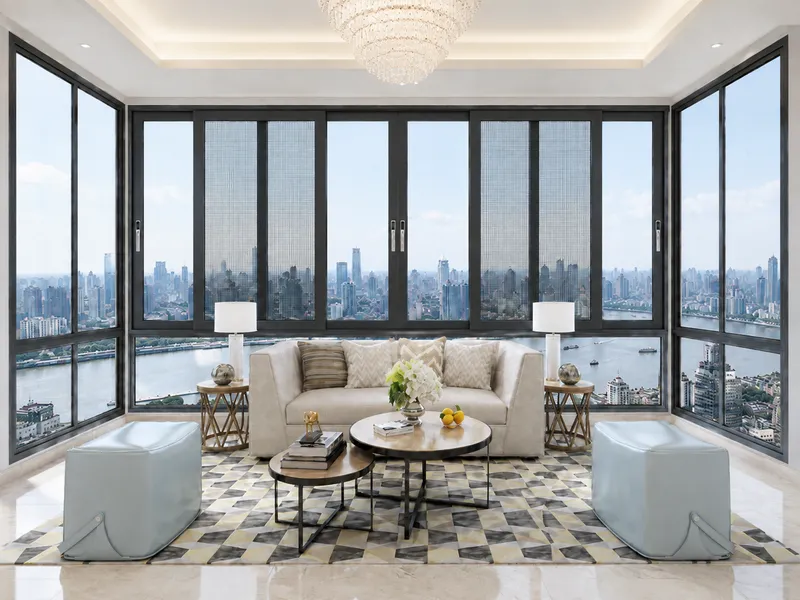
The way a residential window opens—or whether it opens at all—determines ventilation,airtightness,cleaning access,and suitability for different rooms.
| Style | Best For | Key Advantage | Key Limitation |
|---|---|---|---|
| Double-hung | Bedrooms, living rooms, most replacements | Easy to clean (tilt-in sashes); familiar operation; strong resale acceptance | Less airtight than compression-seal styles |
| Casement | Rooms needing maximum ventilation | Tight seal on all sides when closed; excellent air sealing | Sash projects outward; can interfere with walkways |
| Awning | Bathrooms, kitchens, above furniture | Can stay open in light rain; good privacy ventilation | Smaller opening limits airflow |
| Picture / Fixed | Views, daylight, large openings | Top-tier insulation; no moving parts to fail | No ventilation |
Double-hung is the most common residential window in the U.S.,representing roughly half of all replacements,largely because it offers a familiar aesthetic,easy cleaning,and broad availability.Casement and awning windows close against a compression seal,giving them an airtightness edge over sliding-sash designs—but they cost more and require more careful maintenance of hinges and cranks.
For a truly“best”residential window strategy,few homes should use a single style throughout.A common high-performance approach pairs a large fixed picture window for daylight and view with smaller operable casement or awning units on either side for ventilation control.
Matching the Residential Window to Your Climate
Climate is the variable that most often turns a“good”residential window into the wrong one.
Cold climates(zones 6–8).Prioritize a low U-factor—0.30 or below,and 0.22 or better for ENERGY STAR Version 7 in the Northern zone.Triple-pane glass with krypton fill,insulated fiberglass or high-end vinyl frames,and a passive Low-E coating that admits winter solar gain are the strongest combination.
Hot climates(zones 1–3).The priority flips:you want a low Solar Heat Gain Coefficient(SHGC),typically 0.25 or below,to block solar heat before it becomes a cooling load.Double-pane with a solar-control Low-E coating is usually sufficient;triple-pane is rarely worth the premium in these zones.
Mixed climates(zones 4–5).This is the double-pane sweet spot.A well-specified double-pane residential window with Low-E and argon hits the best balance of performance and value,with triple-pane offering marginal but real returns that should be evaluated on payback period rather than specification alone.
Noise-sensitive sites.If the home sits near a highway,airport,or dense urban street,triple-pane glazing provides superior sound attenuation,and laminated glass can be added to the interior pane of a double-pane unit for further acoustic benefit.
What a Residential Window Actually Costs—and What It Returns
Cost expectations for a residential window vary by material and style,but the 2025 installed price ranges provide a realistic planning baseline:
- Vinyl double-hung:roughly$300–$700 per window installed,the budget-conscious benchmark
- Casement:typically$500–$1,000 per window installed
- Fiberglass:approximately$700–$1,200 per window installed,reflecting the durability premium
- Wood:commonly$800–$1,500 per window installed,driven by aesthetic and material cost
For a full-home project,a standard 10-to-15-window replacement often lands between$8,000 and$33,000 turnkey,depending on scope,material,and region.
The return on a residential window investment comes from two directions.First,energy savings:ENERGY STAR–rated windows can reduce utility bills by roughly 6–13%compared with standard windows,with high-performance systems reaching 7–15%in some analyses.Second,resale value:double-hung vinyl windows with Low-E glass have been estimated to return around 67%of their cost at resale,making them one of the stronger remodeling investments in the residential window category.
The payback case is strongest when you combine efficiency upgrades with a long ownership horizon.A residential window that costs 20%more upfront but cuts heating and cooling loads for 20 years often outperforms the cheapest compliant option on total cost of ownership.
The Final Verdict:How to Choose the Best Residential Window for Your Home
If you want a single starting recommendation,begin with a double-pane vinyl or fiberglass residential window,Low-E coated,argon-filled,and ENERGY STAR certified for your climate zone.From that baseline,adjust in three directions:
- Go fiberglass or upgrade to triple-pane if you live in a cold climate,plan to stay in the home for 15+years,or face noise exposure.
- Go aluminum with a thermal break if the architecture calls for slim sightlines and large glass,and you are willing to accept a higher thermal-management burden.
- Go wood or clad-wood if historic character,interior finish quality,or neighborhood architectural review makes aesthetics the deciding factor.
The best residential window is not the most expensive one on the showroom floor.It is the one whose frame,glass,operating style,and climate rating align with how you actually live in your home—and whose maintenance demands match the time you are willing to give them.
If you want to buy residential windows,welcome to talk to George Group.