Homeowners and project buyers searching for double glazed residential windows in 2027 want more than a second sheet of glass.They want measurable comfort,fewer condensation problems,and a window package that arrives correctly specified for the building.This guide explains what separates a well-made double glazed unit from a mediocre one,where installation goes wrong,and how to source custom units for residential projects through a coordinated supplier such as George Group.
What Double Glazed Residential Windows Actually Do
A double glazed unit uses two panes of glass separated by a sealed gap.That gap is filled with air or an insulating gas such as argon.The sealed assembly slows heat transfer far more effectively than a single pane.In practical terms,double glazing reduces heat loss through windows by roughly 50%to 70%compared with single glazing.
Two performance numbers matter most when comparing double glazed residential windows:
- U-value measures how readily heat passes through the window.A lower U-value means better insulation.A standard double-glazed unit with an argon fill and a less conductive frame can cut heat loss roughly in half compared with single glazing.
- SHGC(solar heat gain coefficient)measures how much solar heat the window admits.In cold climates,a higher SHGC helps capture free solar warmth;in hot climates,a lower SHGC reduces cooling loads.
A good window specification balances both numbers for the project’s climate zone.A unit with an excellent U-value but an unsuitable SHGC can still leave rooms too hot in summer or too dependent on heating in winter.
Frame Choice Changes Real-World Performance
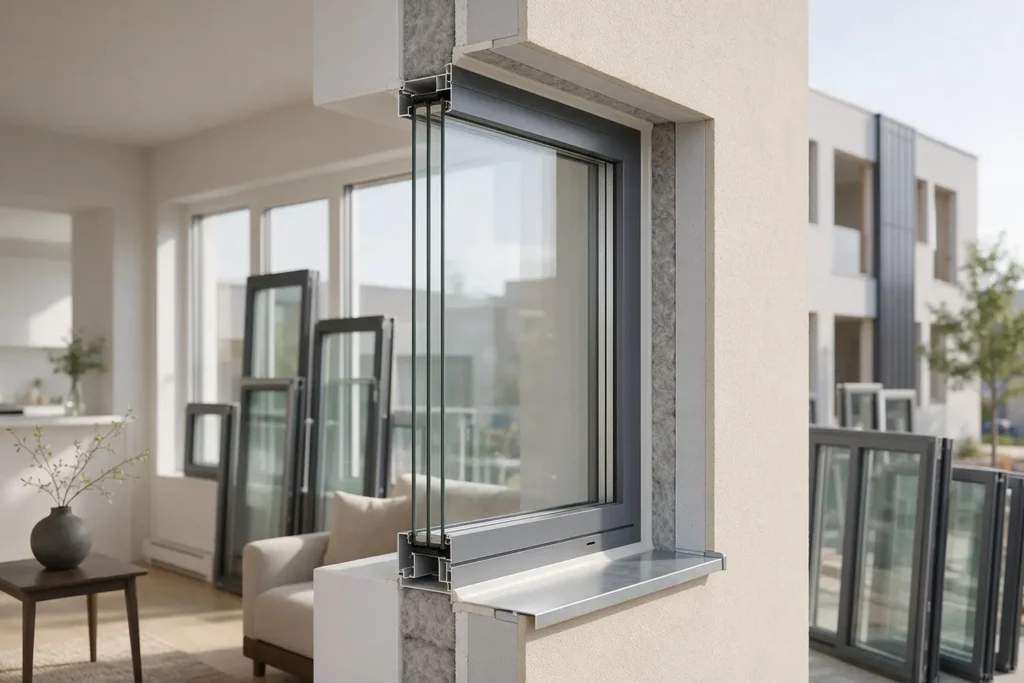
The glass unit performs only as well as the frame around it.Three frame families dominate residential projects,and each carries trade-offs in cost,maintenance,and thermal behavior.
uPVC frames offer strong thermal performance at the lowest upfront cost.They need little maintenance and suit standard residential openings well.
Aluminium frames deliver slim sightlines and excellent durability.Standard aluminium conducts heat readily,so thermally broken profiles matter for energy performance.A thermal break separates the inner and outer metal sections and interrupts the conductive path.
Timber frames insulate naturally and perform very well with double glazing.They demand more maintenance than uPVC or aluminium,particularly in wet or humid climates.
Buyers should treat the frame and the glazing as one system.A high-spec glass unit in a poorly sealed frame will underperform,and a premium frame cannot rescue a low-grade sealed unit.
Where Double Glazed Units Fail—and How to Prevent It
Most failures trace back to two preventable issues:poor installation and seal degradation.
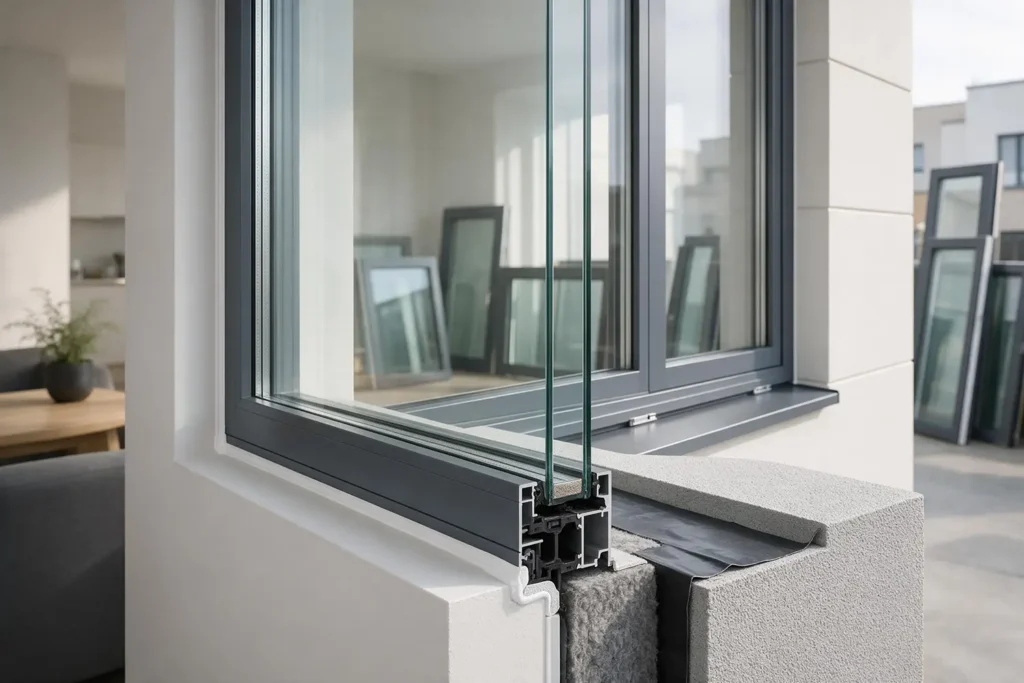
Improper installation ranks among the biggest causes of double glazing failure.Poor fitting leads to air leaks,misaligned frames,and condensation between panes.Gaps around the frame and incorrect spacing stress the seals and shorten the unit’s service life.
Seal failure produces the classic foggy look.When the perimeter seal breaks,moisture enters the sealed cavity and condenses inside the unit.That moisture cannot be wiped away from either surface.A failing seal also means the insulating gas has escaped,so thermal performance drops.
Prevention comes down to three habits:
- Buy from a supplier that controls seal quality.Warm-edge spacer bars and proper perimeter sealing reduce edge heat loss and seal stress.
- Insist on careful installation.Correct alignment,proper drainage,and intact weather sealing protect the unit after handover.
- Maintain the basics.Clean glass with non-abrasive products,keep drainage channels clear,and inspect seals for visible damage.
What Buyers Should Expect to Pay and Save
Installed costs for double glazed residential windows vary widely by region,frame material,and glazing specification.In the United States,average installed costs run roughly$400 to$800 per window,and a full-home replacement of 15 to 20 windows falls in the$6,000 to$16,000 range.Energy savings alone typically produce a payback period of 8 to 15 years in cold climates.
Payback is not the only financial argument.Homes with double glazing often sell at a premium over comparable homes with single-pane windows,and buyers increasingly recognize lower running costs as a desirable feature.For project buyers,the stronger case usually rests on specification quality and supply reliability rather than a single payback figure.
Sourcing Custom Double Glazed Residential Windows for Projects
Residential projects rarely fit standard window sizes across every opening.Custom dimensions,frame finishes,glass thickness,and opening styles all shape the final order.A supplier that coordinates those variables reduces the risk of mismatched deliveries and installation delays.
George Group,based in Foshan,China,supplies double glazed residential windows as part of a one-stop building materials package for residential projects.Established in 2006,the company supports homeowners,contractors,developers,and global buyers with factory resources,customization,quality control,consolidation,and delivery coordination.
Beyond standard double glazed units,George Group customizes windows across dimensions,frame profiles,glass types,and finishes.The supply scope extends to doors,flooring,tiles,kitchen cabinets,wardrobes,sanitary ware,lighting,and stone,so project teams can consolidate multiple material categories through one supplier.For buyers comparing double glazed residential windows options for a full residential project,that consolidation reduces the number of vendors,shipping schedules,and quality checks to manage.
George Group provides design support,protective packing,export documentation,installation guidance drawings,and follow-up support for installation questions and warranty needs.Buyers who need custom double glazed residential windows for a residential project can contact George Group to confirm specifications,request samples or drawings,and align the window package with the broader material schedule.
A Final Checklist for Buyers
Before committing to a double glazed window order,confirm five points:
- Climate-matched performance.Check U-value and SHGC together,not U-value alone.
- Frame and glass as a system.The frame material,thermal break,spacer,and glass coating should work together.
- Seal quality and warranty.Ask how the manufacturer seals the unit and what coverage applies to seal failure.
- Installation responsibility.Clarify who handles fitting and what guidance the supplier provides.
- Supply coordination.For multi-category projects,a consolidated supplier simplifies logistics and reduces compatibility surprises.
Well-specified double glazed residential windows reward buyers with quieter rooms,fewer condensation problems,and more predictable energy use.The key lies in treating the window as an engineered assembly—and sourcing it from a supplier that controls the details from specification through delivery.