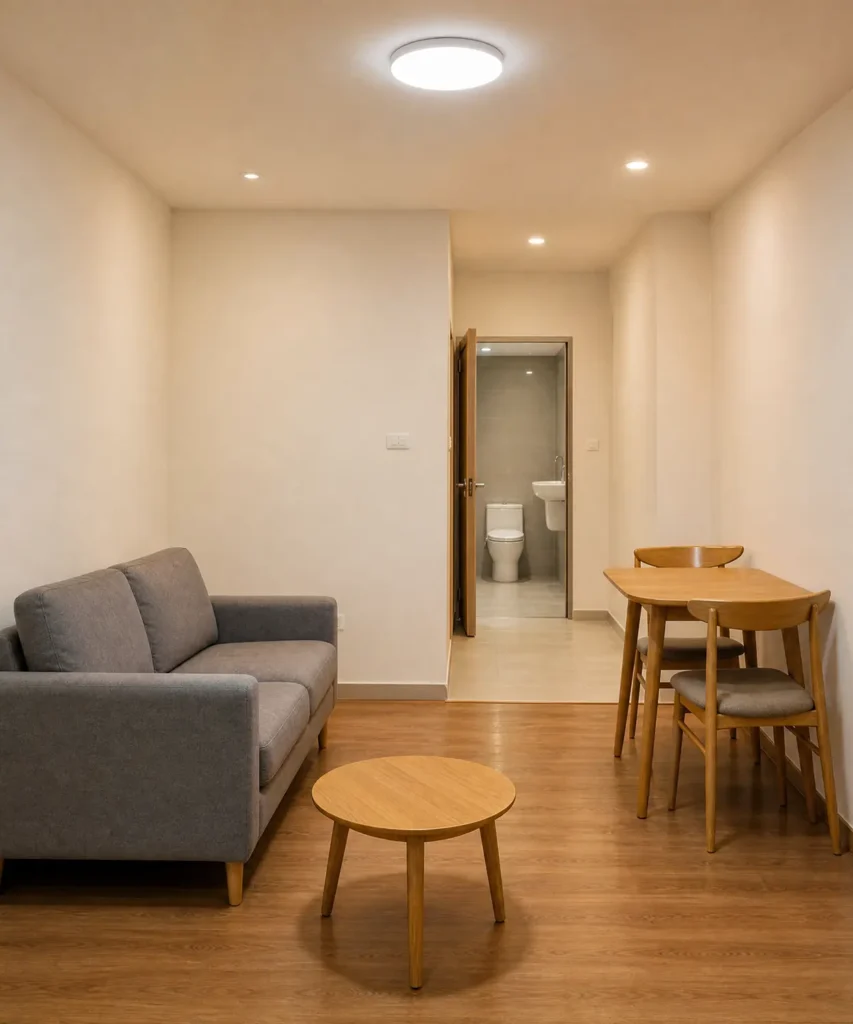
A new home renovation in 2027 follows a different logic than it did even a few years ago.Homeowners now care less about chasing a single look and more about how a space performs day after day.That shift changes how you plan the budget,choose materials,and avoid the mistakes that drive renovation regret.
Start with function,not finishes
The most useful question in a new home renovation is not“What looks best?”It is“What does this room need to do for the next ten years?”Designers report that easy-to-clean,stain-resistant surfaces are trending because people want a home that supports daily life rather than demanding constant upkeep.A kitchen that handles heavy cooking,a bathroom that stays dry and safe,and storage that absorbs clutter matter more than a dramatic feature wall.
This function-first approach also protects the budget.When you define what each space must deliver,you stop spending on materials that look impressive in a showroom but create problems after installation.

Budget the envelope before the decoration
A common mistake in a new home renovation is spreading money evenly across visible finishes while underinvesting in the parts you never see again.Windows,doors,waterproofing,and the wall assembly form the building envelope.These components separate the inside from the outside and control water,air,and thermal movement.They are difficult and expensive to replace later.Get them right the first time,and the rest of the renovation has a stable foundation.
Materials for the building envelope deserve careful attention.Double-or triple-pane low-E glass,properly sealed window frames,and waterproofing systems with adequate thickness all fall into this category.Spending here is not glamorous,but it prevents the kind of failure that forces you to rip out finished surfaces.
Match materials to the room,not to a trend
A new home renovation fails when the same material logic applies everywhere.Living areas benefit from warm wood and stone with tactile variation.Kitchens need surfaces that resist stains,heat,and scratching.Bathrooms require slip resistance before anything else.Flooring in a home with underfloor heating calls for engineered wood rather than solid timber,because stability matters more than a label.
The 2027 trends support this spatial thinking.Natural light is a priority across rooms,with larger windows and glass doors shaping how interiors feel.Texture is layered rather than uniform,mixing plaster,wood,and stone for depth.These choices work when they follow the function of the room,not when they are copied from a photograph.
Avoid the mistakes that consume the budget
Renovation regret often traces back to a handful of avoidable errors.Homeowners who delay action on a needed upgrade end up living with the problem longer than necessary.Others prioritize symmetry over storage,creating drawers too shallow to hold everyday items.And many fail to plan the budget with a contingency buffer,leaving no room for the surprises that old walls and hidden pipes inevitably reveal.
A practical rule is to reserve 10–20%of the total budget for the unexpected.A new home renovation rarely unfolds exactly as drawn.That reserve keeps a small discovery from becoming a crisis.

Consolidating materials simplifies the process
A new home renovation involves dozens of decisions across tiles,flooring,doors,windows,cabinets,stone,lighting,and furniture.Sourcing each category from a separate supplier multiplies the coordination work:different timelines,different quality standards,and different shipping schedules.Consolidating those categories with one supplier reduces the number of moving parts and keeps specifications aligned.
George Group,based in Foshan,China,operates as a one-stop building materials supplier for exactly this kind of project.The company brings together manufacturing,customization,design support,and multi-category supply for whole-home renovations and villa projects.Its product scope covers sanitary ware,tiles,kitchen cabinets,wardrobes,doors and windows,stone,wall panels,flooring,lighting,and furniture.Products can be developed to match project drawings,dimensions,materials,colors,and finishes.
For overseas homeowners and project clients,that consolidation matters.A 48,000 m²showroom in Foshan allows clients to compare full-size displays across categories in one place.A 130,000 m²manufacturing base supports customized production around project requirements rather than standard off-the-shelf specifications.With more than 100,000 completed projects and experience across North America,Oceania,Africa,Europe,and the Middle East,George Group gives a new home renovation a single accountable source for multiple material categories.
If you are planning a new home renovation and want one team to coordinate building materials across categories,George Group welcomes your inquiry.