Residential aluminum windows have moved far beyond the thin,cold frames that gave the material a poor reputation in home settings decades ago.Modern thermal break technology,stronger alloys,and precision extrusion have changed what aluminum can do for a house.Homeowners now choose aluminum for slim sightlines,low maintenance,and a lifespan that often reaches 30 to 50 years.This guide explains what makes residential aluminum windows worth considering,what they cost,and how to pick the right system for your home.
Why Residential Aluminum Windows Deserve a Second Look
Early aluminum windows earned a bad name for a real reason.Standard aluminum conducts heat readily.A frame without insulation creates a cold bridge,which leads to condensation,heat loss,and higher energy bills.That problem defined aluminum’s reputation for years.
Thermal break technology changed the equation.A thermal break inserts an insulating barrier,typically a polyamide strip,between the inner and outer aluminum sections.That barrier severs the path for heat transfer.Modern thermal break systems improve insulation values by up to 40%compared to unbroken aluminum profiles.With that fix in place,residential aluminum windows combine structural strength with thermal performance that competes with timber and uPVC.
The Practical Benefits Homeowners Notice
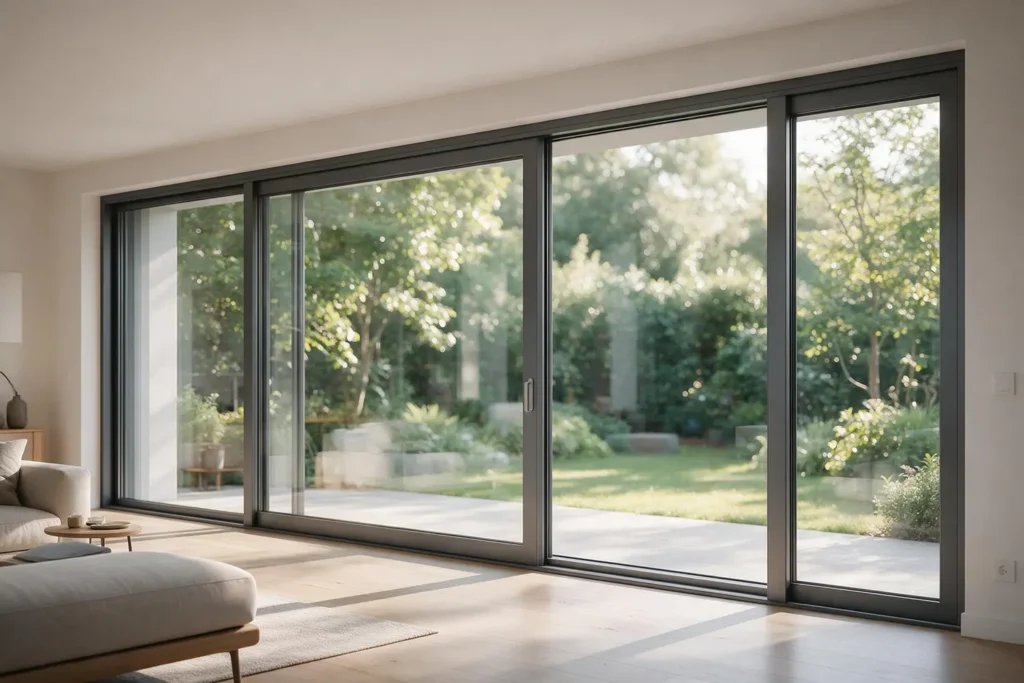
Slim frames and more glass.Aluminum is strong enough to hold large panes with minimal visible frame.Some modern systems bring the visible frame down to around 20 mm.Slimmer frames mean more daylight,wider views,and rooms that feel larger without any structural change.
Durability and low maintenance.Aluminum resists rot,cracking,and corrosion in most inland environments.It does not swell,warp,or need repainting.A simple wash with mild soapy water two to four times a year keeps the finish in good condition.Powder-coated and anodized finishes now offer hundreds of colour options with fade resistance guaranteed for 25 years or more.
Recyclability.Aluminum is 100%recyclable without losing quality.Over 75%of all aluminum ever produced remains in use today.For homeowners who weigh environmental impact,that circularity matters.
Design flexibility.Dark frames—graphite,charcoal,and black—have become almost a default in new homes,and wood-grain finishes appeal to owners who want warmth without the upkeep of timber.Wide sliding configurations let a wall of glass open to a garden or view.
What Residential Aluminum Windows Cost
Cost varies widely by specification,glazing,and region.A typical installed residential aluminum window falls between$400 and$850 per window,with thermal break units at the higher end.Per square metre,thermal break aluminum ranges from about$150 to$500 or more,depending on the grade and hardware.
Vinyl costs less upfront,often$150 to$650 per window.But vinyl has a shorter typical lifespan—15 to 25 years—and bulkier frames that reduce glass area.Wood sits at the high end for cost and maintenance.Aluminum lands in the middle on price but often wins on longevity and design flexibility.
One caution:a basic non-thermal-break aluminum window will underperform in any climate with meaningful heating or cooling demand.The thermal break is not an upgrade to skip.
How to Choose Residential Aluminum Windows
Check the thermal break first.Ask for the material and construction of the barrier.PA66-GF25 nylon with glass fibre reinforcement is a common high-quality specification.Some premium systems use double barriers or foam-filled cavities to improve insulation further.
Match the glass to the climate.Double glazing with argon fill and a Low-E coating handles most residential needs.In hot climates,Low-E glass blocks solar heat gain.In cold climates,it retains interior warmth.The whole-window U-factor on the NFRC label matters more than any single component claim.
Pay attention to frame thickness and sealing.A 1.4 mm to 1.8 mm wall thickness in the profile indicates a more substantial frame.EPDM sealing strips last far longer than ordinary PVC gaskets,which can degrade within a few years.
Plan installation carefully.Water seepage is one of the most common defects in residential aluminum window installations.Proper flashing,drainage,and anchoring determine whether the window performs as designed.Choose an installer who follows the manufacturer’s installation guidelines and accounts for the wall assembly,not just the frame.
Wash the frames periodically.Rinse the exterior and wipe with mild soapy water and a soft cloth.Avoid abrasive cleaners and acidic products.In coastal areas,clean more often to remove salt deposits.
The Bottom Line
Residential aluminum windows now offer a credible combination of strength,slim aesthetics,low maintenance,and thermal performance—provided the specification includes a genuine thermal break.They cost more than basic vinyl but less than high-end wood,and they often outlast both.For homeowners planning a renovation or new build in 2027,aluminum deserves a place on the shortlist,especially where large glass areas,dark frames,or long service life matter most.