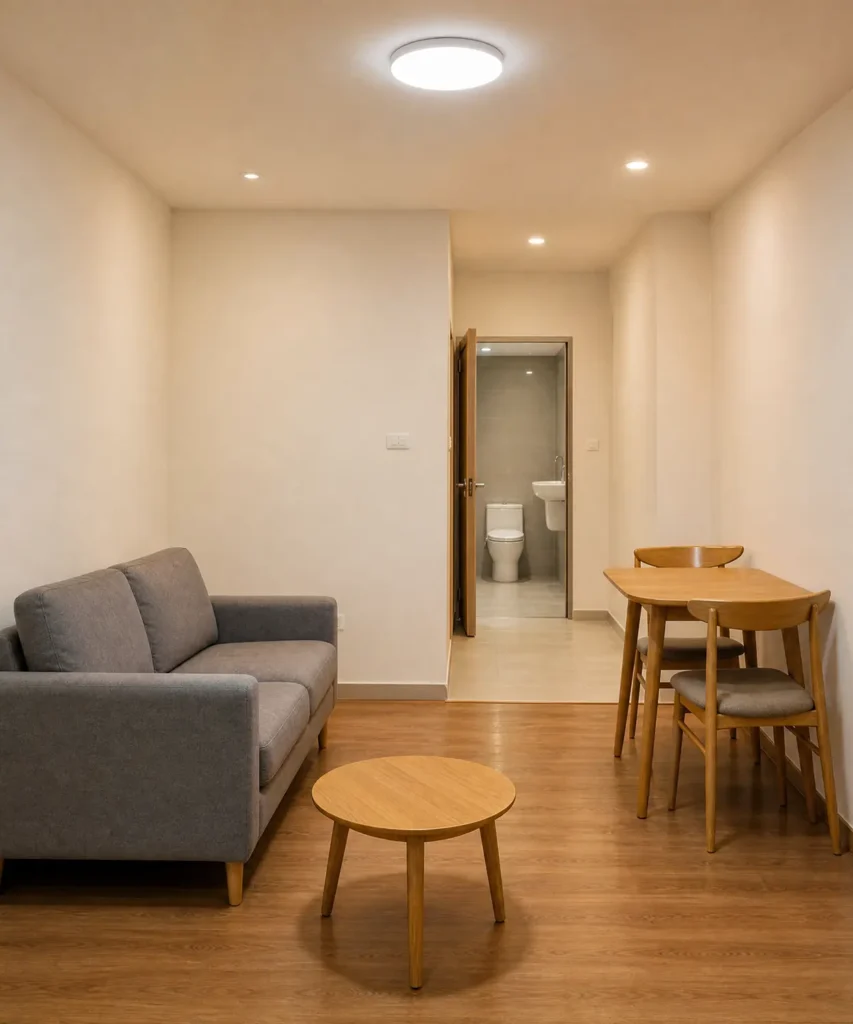
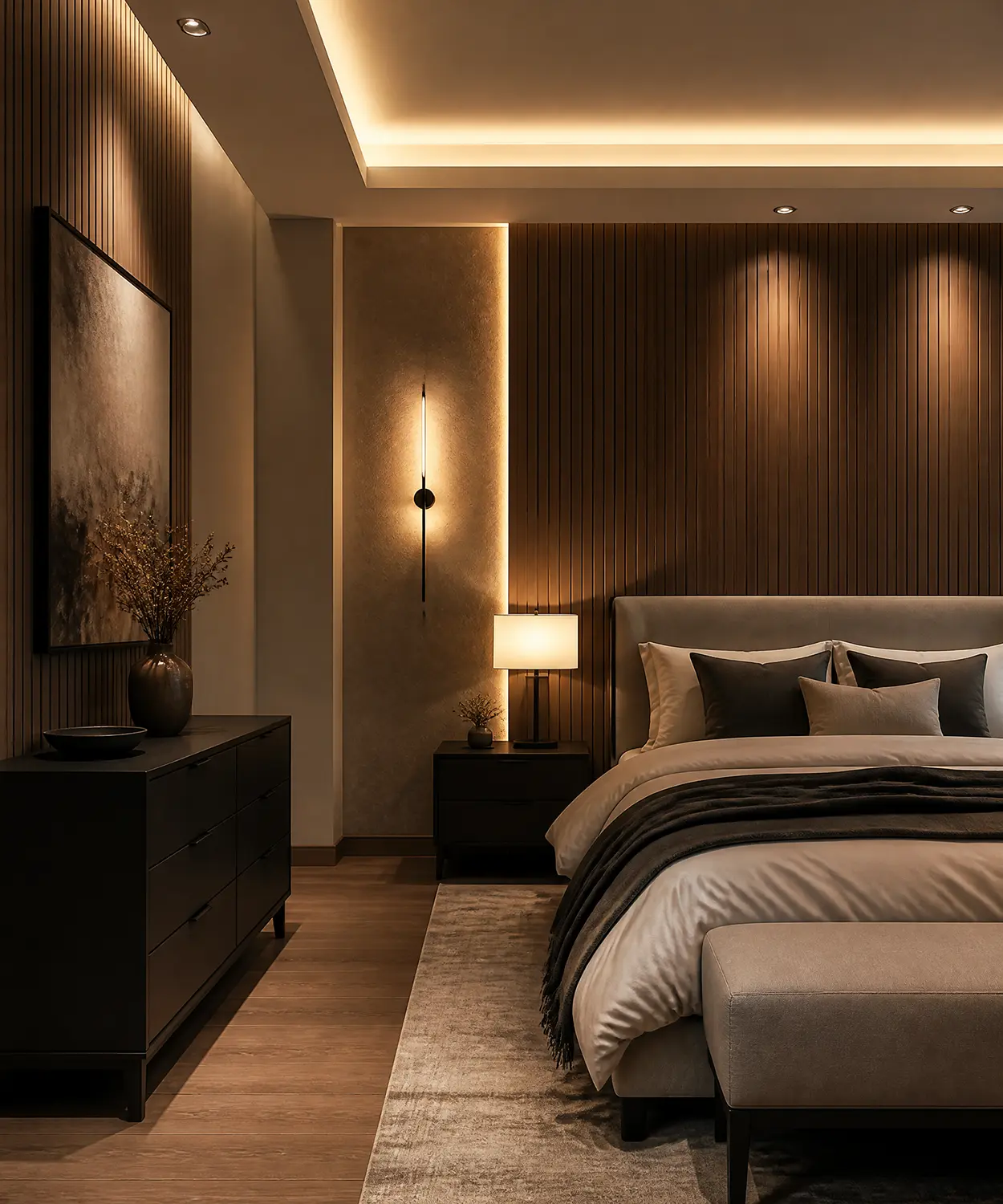
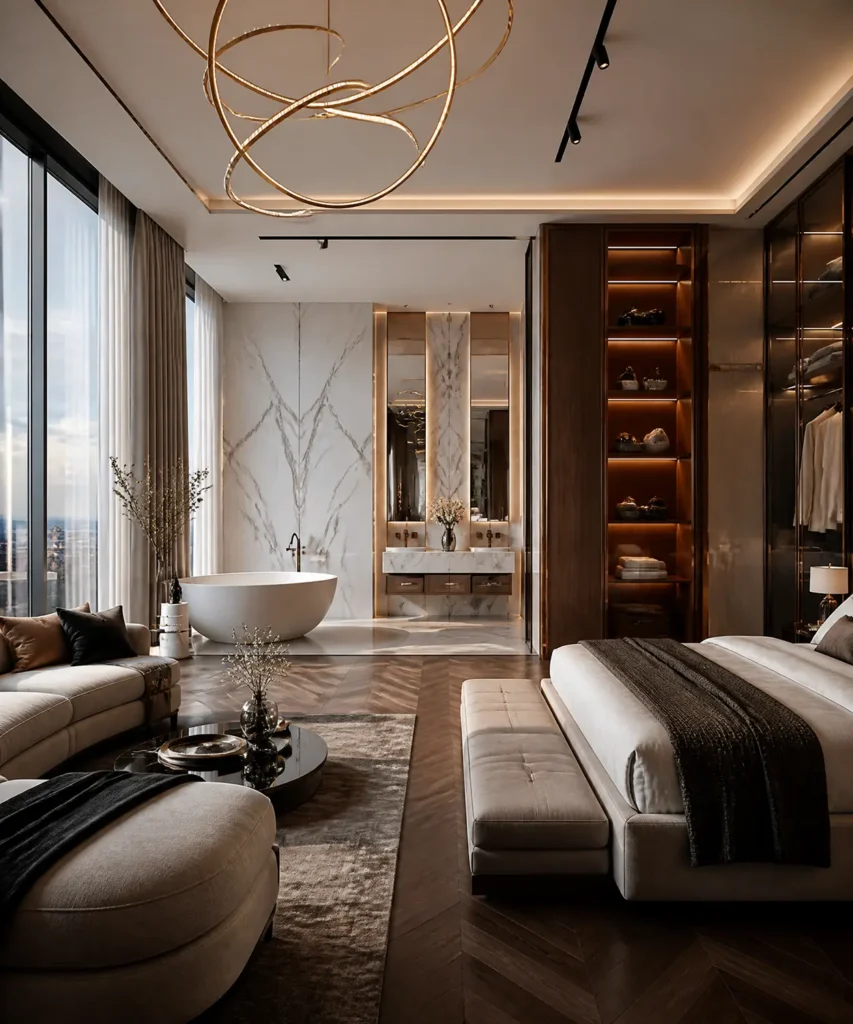
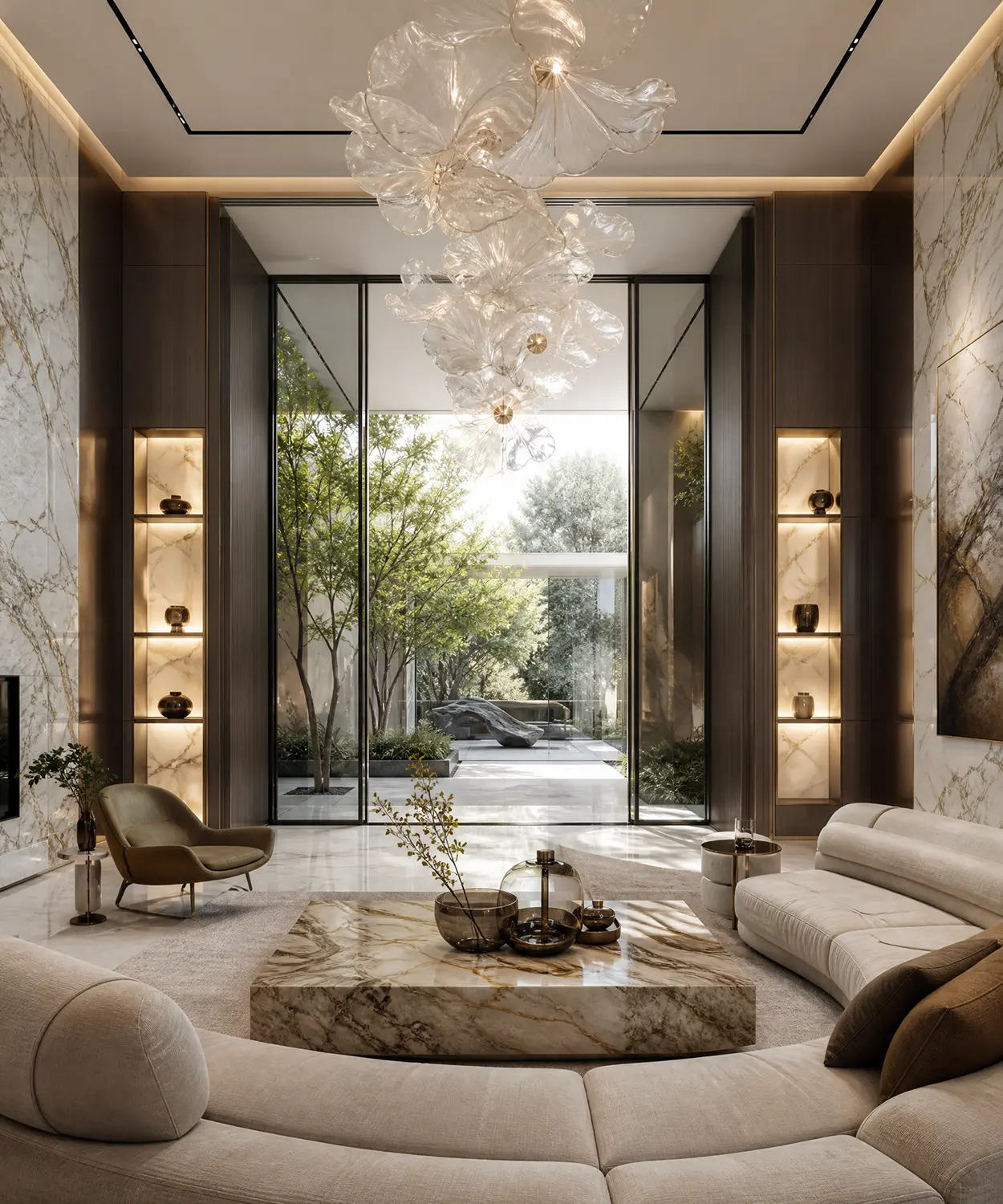
2027 interior design styles are moving decisively away from the polished,catalog-perfect look that dominated the early 2020s.The direction is warmer,more personal,and deeply material.Designers,color forecasters,and material manufacturers are converging on a shared brief:rooms should feel lived in,layered,and expressive of the people who occupy them.If you are planning a residential or commercial project around 2027 Interior Design Styles,understanding these shifts early gives you a practical edge—both in design direction and in material sourcing.
The Defining Shift:Collected Interiors Replace the Matching Set
The single strongest current running through popular interior design styles in 2027 is the collected interior.The matched bedroom set and the showroom-style living room are out.In their place,designers are building rooms around pieces that carry history:an inherited armchair,a flea-market mirror,a hand-thrown vessel.Coherence comes not from uniformity but from repetition—a narrow wood-tone range,a recurring metal finish,or a single color family threaded through mixed objects.
This is not eclecticism for its own sake.It is what the industry is calling“found luxury”:the craftsmanship of quiet luxury,redirected toward pieces with patina and personal meaning.The practical takeaway for 2027 projects is that material choices must support aging and layering.Natural wood that wears in rather than out,stone with visible movement,and textiles that soften with use all become specification priorities.
Earth Tones,Green Walls,and the“Handsome-fication”of Color
Color in 2027 is warm,saturated,and grounded.White walls are receding;olive,terracotta,clay,ochre,deep burgundy,and chocolate brown are moving in.Four major paint brands independently converged on green for their 2027 color directions—Benjamin Moore’s Webster Green,Sherwin-Williams’Celery,Behr’s Grounded,and Dulux’s Soulful Sage—a level of agreement that carries real signal about where 2027 interior design styles are heading.
Alongside green,designers describe a“handsome-fication”of color:deep greens,dark blues,chocolate browns,and maroon shades that feel like a commitment rather than a trend.Luminous Blue,a saturated sapphire,has been named a 2027 Color of the Year,positioned as an eccentric,mysterious accent against warm earth tones.For material specification,this palette rewards surfaces with depth—honed stone rather than polished,matte lacquer rather than high gloss,and wood stains that let grain read through the color.

Sculptural Shapes and the Seamless Curve
Form in 2027 is soft,rounded,and often sculptural.Sofas with curved backs,tables with eased edges,and lighting that reads as functional art are recurring features in 2027 Interior Design Styles forecasts.The trend goes beyond furniture:arches,columns,and rounded headboards are displacing flat walls and right angles,and wood is following the curve through flexible panels and bent elements.
This shift has direct material implications.Curved millwork and seamless radiused surfaces require substrates and finishes that can follow a bend without cracking or reading as a print.The same applies to stone:expressive marble,travertine,and quartzite are being used as focal accents rather than quiet backgrounds,which means the material’s natural movement becomes part of the design language.
Texture as the New Pattern:Burl,Mineral,and Acoustic Surfaces
Where earlier years relied on bold pattern,2027 relies on texture with movement.Burl wood,faux bois,and moiréfabrics share a rippling quality that adds interest without requiring additional color or print.Raw mineral surfaces—concrete,stone,matte plaster—are defining the tactile character of the year,with the eye seeking depth and grain rather than a smooth,sealed finish.
Acoustics are also becoming a visible design material.Fluted walls,slatted reliefs,and vertical textures are specified not only for their appearance but for their sound-absorbing performance,turning a technical requirement into a surface statement.For anyone sourcing materials for a 2027 project,these are not decorative add-ons;they are core specification categories that need to be coordinated early.

Wellness,Analogue Rooms,and New Heritage
Wellness has moved from amenity to expectation in popular interior design styles in 2027.Buyers want natural light,calm spatial sequences,spa-style bathrooms,and material longevity,with sustainability shifting from a trend to a baseline requirement.In parallel,analogue rooms—reading corners,game rooms,and conversation-focused gathering spaces—are gaining ground as screens lose their grip on the living room.
New Heritage ties these threads together.Antiques and heirlooms are entering contemporary rooms without formality,paired with modern sofas and minimalist casegoods.The 2027 home looks assembled over time,not purchased in a weekend.For projects aiming at this aesthetic,the material palette needs to span both new and aged:reclaimed or character-grade timber alongside clean contemporary surfaces,with finishes that bridge the two rather than compete.
Bringing Any 2027 Design to Life:The Material Sourcing Reality
The design directions above are clear.The harder question is execution.A collected interior depends on finding materials that match a specific patina.A curved millwork detail depends on substrates that perform.An earth-tone palette depends on stone and wood tones that hold together under real light.When you already have drawings and a defined 2027 design direction,the bottleneck is rarely the idea—it is coordinating materials,custom furniture,and finishes from multiple suppliers without losing the intent of the drawing.
This is where George Group fits into the 2027 design conversation.As a one-stop building materials and interior solutions supplier with over 20 years of experience,George Group coordinates design direction,premium materials,custom furniture,production,quality control,and global delivery under one workflow.The product range covers the exact categories that 2027 styles demand:tiles and surfaces,marble and stone,wood veneer,lacquer finishes,wall panels,fabric and leather,doors and windows,lighting,sanitary ware,and whole-home custom furniture.
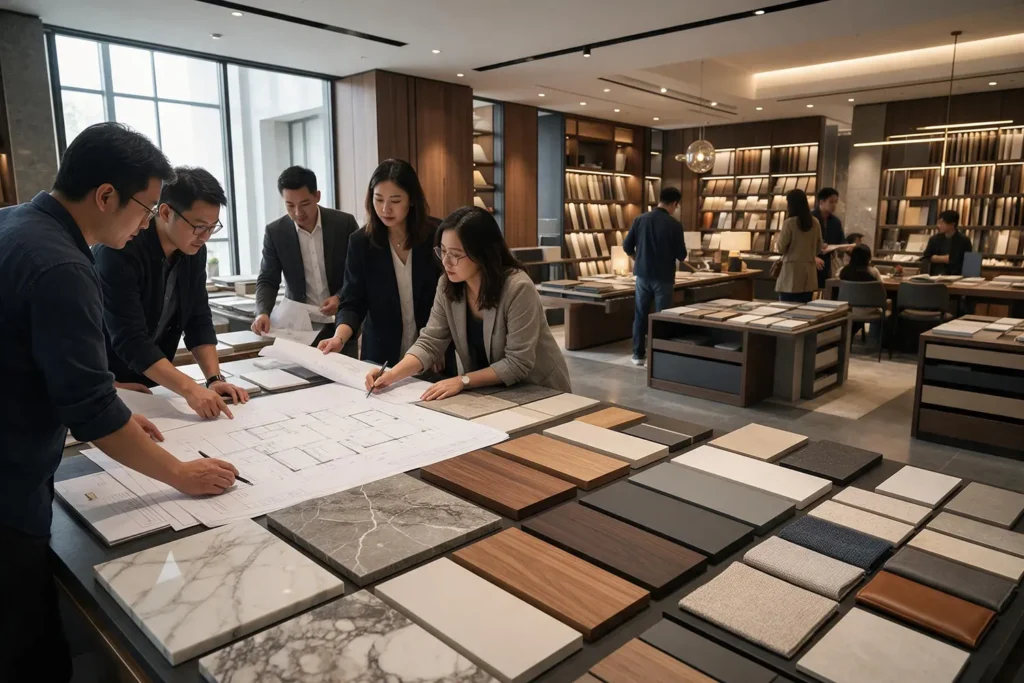
For projects driven by a specific drawing or reference image,George Group’s role is straightforward:1:1 restoration of the intended design.The team reviews floor plans,dimensions,style references,and project location,then matches materials and custom furniture to the design scope before production begins.A 30,000㎡Foshan showroom allows clients to compare stone,wood veneer,lacquer,wall panels,fabric,and tile in real light before committing to production—a practical safeguard when the design depends on subtle tonal and texture relationships.
If you already have the drawings and are searching for a material supplier who can read the intent behind them,George Group is built for that brief.Whether the 2027 direction is a collected,earth-toned interior,a sculptural curve-heavy scheme,or a heritage-layered room,the sourcing question is the same:can every surface,finish,and custom piece be coordinated to the drawing?That is the capability George Group brings to the 2027 design landscape.